
Overview
What is Heroin?
Common and street names
diamorphine · smack · brown
Drug category
Opioid
Forms and appearance
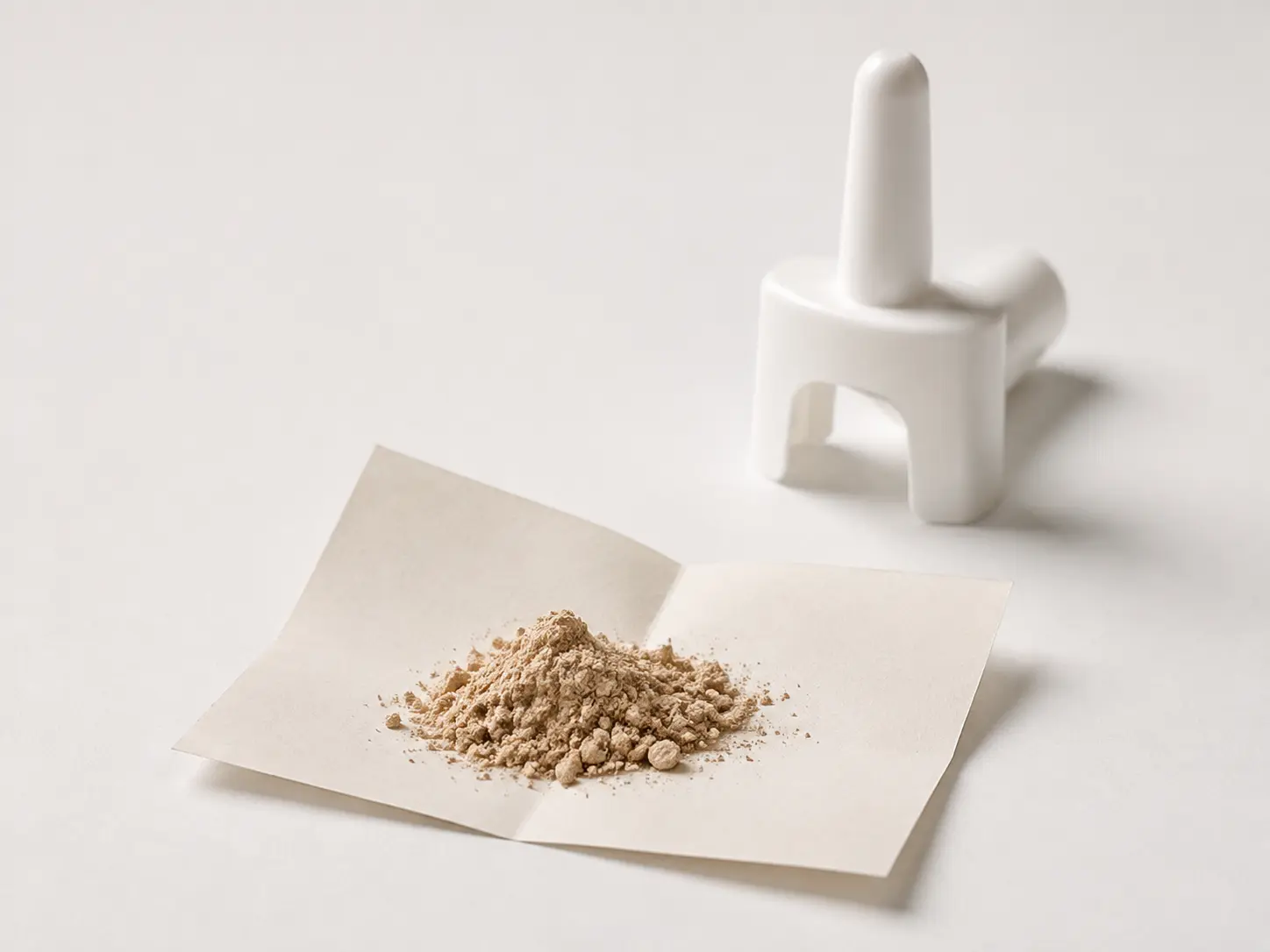
UK illicit heroin is commonly encountered as tan/brown powder, but colour and texture are not reliable indicators of identity, strength or contamination.
How it is commonly used
Heroin may be smoked, snorted or injected. Injecting adds infection, blood-borne virus, vein and soft-tissue risks beyond opioid toxicity itself.
Brain & body
How Heroin affects signalling and behaviour
Diamorphine rapidly reaches the brain and is converted to active opioid metabolites including morphine. Activation of mu-opioid receptors can reduce pain and produce sedation and reward while also suppressing the brainstem drive to breathe.
Explore reward, cues, craving, stress, tolerance and neuroplasticity without a simplistic “hijacked brain” model.
Effects & risks
What people may experience — and what can go wrong
Commonly reported effects
- Pain relief and sedation
- Euphoria or relief
- Drowsiness and slowed reactions
- Pinpoint pupils, nausea or itching
Short-term risks
- Fatal respiratory depression
- Aspiration
- Unknown strength or contamination
- Injection-related infection and vascular injury
Longer-term risks
- Tolerance and physical dependence
- Overdose risk after reduced tolerance
- Constipation and other chronic opioid effects
- Blood-borne virus and bacterial infection risk where injecting equipment is shared or non-sterile
Mental-health effects
Opioids may be used to dampen physical or emotional distress, and relief can become a powerful reinforcer. Depression, trauma and social stress can interact with dependence and should be addressed without requiring abstinence first.
Dependence, tolerance & withdrawal
Repeated use can change the pattern
Physical dependence and tolerance can develop. Withdrawal is distressing but is not usually life-threatening in otherwise medically stable adults; treatment can include opioid agonist medicines and psychosocial support.
Mixing drugs
Interaction risks to know
Heroin + benzodiazepines markedly increases overdose risk.
Heroin + alcohol or GHB/GBL adds respiratory-depressant effects.
Pregabalin/gabapentin and other sedatives can further increase sedation and breathing risk.
The absence of a recorded interaction does not mean that a combination is safe. Strength, dose, health, tolerance, contamination and other substances can alter risk.
Check another combinationHarm reduction
Practical ways to reduce risk
Carry naloxone and make sure people nearby know how to use it.
Avoid using alone; if you do, use a local overdose-safety arrangement where available.
Assume tolerance is lower after detox, hospital, prison or a period without opioids.
Use sterile equipment and never share injecting equipment.
Harm reduction can reduce some risks; it cannot make an unregulated drug, dose or combination risk-free.
Emergency
When to call 999
- Slow, shallow, irregular or stopped breathing
- Cannot be woken
- Blue/grey lips or skin
- Gurgling or snoring-type breathing with reduced consciousness
Treatment & support
Help does not require one fixed recovery goal
UK drug and alcohol services can assess physical health, mental health, dependence, risk, housing and support needs, then agree a plan with the person. Goals may include immediate harm reduction, stabilisation, reduction or stopping use.
Physical dependence and tolerance can develop. Withdrawal is distressing but is not usually life-threatening in otherwise medically stable adults; treatment can include opioid agonist medicines and psychosocial support.
Brief history
How we got here
Diamorphine was synthesised in the nineteenth century and was once marketed medically before dependence and harms became clearer. UK policy later developed a distinctive medical and treatment history around opioids, including methadone and buprenorphine treatment and take-home naloxone.
Read the history guideKey facts & misconceptions
Three useful corrections
Tolerance can fall quickly after a break.
Naloxone is a temporary opioid antagonist: emergency care is still required.
Colour or texture cannot reveal opioid strength or contamination.
Frequently asked questions
Quick answers
What type of drug is Heroin?
Heroin is described here as opioid. Some drugs cross categories, and mixtures may contain more than one drug type.
Can Heroin be identified by appearance?
No. Appearance, packaging, a logo or colour cannot reliably establish identity, strength or contamination.
When should I call 999?
Call 999 for a suspected drug emergency, including reduced consciousness, abnormal breathing, seizure, severe chest pain or severe confusion. Slow, shallow, irregular or stopped breathing
Evidence & governance
Sources and review
Responsible organisation: TD Consultancy
Published: 5 August 2026 · Last reviewed: 5 August 2026
Next formal review: February 2027, or earlier if material safety or legal information changes.
Evidence on illicit drug composition and emerging markets can change quickly. Legal status can be compound- and preparation-specific. Links below are prioritised to current official UK guidance.